
Every baby counts!

The following key words can also help in finding us with internet search engines:
"gns newborn", "gns neonate", "gns society", "global newborn", "global neonatal society", "worldwide newborn society", "universal newborn society", "worldwide newborn organization", "global newborn health", "newborn organization world"
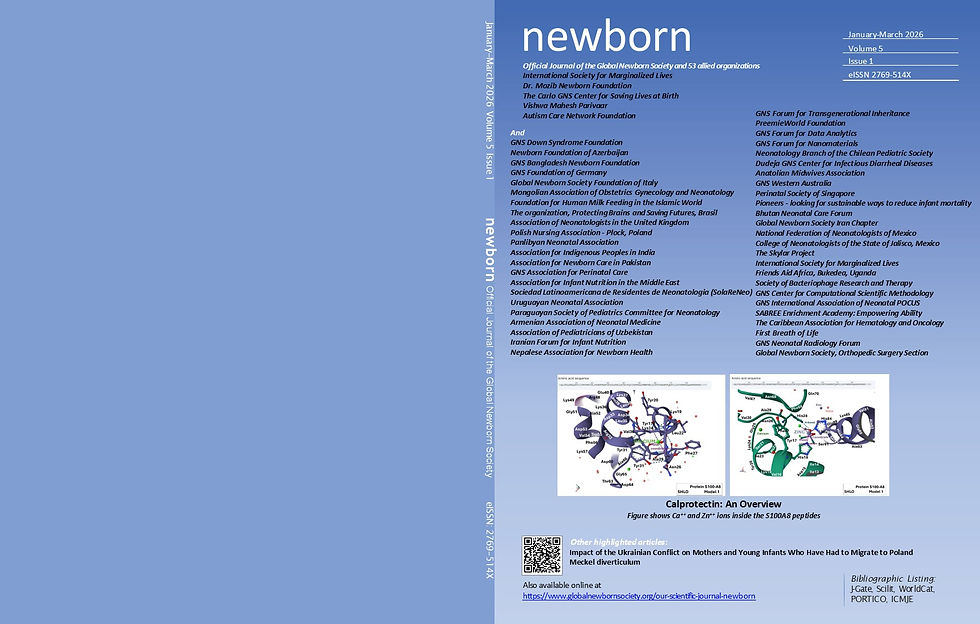
A composite PDF file containing all articles in volume 5, issue 1; January-March 2026 is provided here. The references (with links) to all the individual articles are listed below.
He L, Harold SF, Frydrysiak–Brzozowska A. A Combination of Human Wisdom and Artificial Intelligence will Win the Game. Newborn 2026; 5(1):iv-xiv. DOI: 10.5005/newborn-5-1-iv.
----------------------------------------------------------------------------------------------------------------------------------------------------
Michie C, Maheshwari A. Searching, a Rapidly Evolving Skill. Newborn 2026;5(1):1–5. DOI: 10.5005/jp-journals-11002-0152.
Abstract:
With the advent of artificial intelligence (AI) neural networks, their capacity to deliver answers to searches for medical or scientific information is rapidly taking over from search engines and publishers. This should empower searches based on thoughtful questions, including “why,” “how,” and “what if” – the Socratic approach. Outputs from AI large language models (LLMs) require careful validation, and it is likely they will limit serendipity.
Key scientific associations: Agentic AI systems, Alexa, algorithmic biases, Anthropic’s Claude, creativity, fabrications, filter bubbles, hallucinations, health information seeking behavior, Index Medicus, infant, large language models, mothers, National Library of Medicine, newborn, Occam’s razor, OpenAI’s Chat GPT, personalized algorithms, PubMed, searching, serendipity, Siri, Socratic questions, team consultations, voice assistants.
-----------------------------------------------------------------------------------------------------------------------------------------------------------------
Pratasevich TS, Yankouskaya N, Dzianisik N, et al. Clinical and Laboratory Features of Neonatal Seizures in Belarus. Newborn 2026;5(1):6–12. DOI: 10.5005/jp-journals-11002-0154.
Abstract:
Introduction: Seizures are the most frequently-seen neurological emergency in neonates. The first weeks of life are a time of heightened risk for seizures due to age-dependent risk factors. Neonatal seizures are harmful to the developing brain; early and accurate diagnosis is critical.
Methods: We reviewed the clinical course of 75 infants serially admitted for convulsive seizures during the period 2016–2021 in the Grodno
region of Belarus. All information relevant to the course of pregnancy and childbirth, gestational age, characteristics of seizures and data from laboratory and instrumental research methods were recorded.
Results: Most patients in our cohort were full-term (52/75, 69.3%). There was a history of severe obstetric complications in 69/75 (92%). A risk of miscarriage and acute respiratory viral infection had been recorded in the mother in 25/75 (33%) each. The main causative factors for seizures were hypoxic-ischemic encephalopathy (64/75, 85.3%), perinatal infections (52/75, 70%), metabolic disorders (24/75, 32%), and intracranial hemorrhages (20/75, 26.7%). Seizures were seen most often in the early neonatal period (61/75, 81.3%; p < 0.001). Motor automatisms (36/75, 48%) and clonic convulsions (30/75, 40%) were seen frequently.
Conclusion: Our team was able to identify motor seizures more frequently. The main causes of seizures were hypoxic-ischemic encephalopathy, perinatal infections, metabolic disorders, and intracranial hemorrhages but the etiology could not be identified in many cases. Further work is needed for timely identification of cause as etiology is a leading predictor of outcome.
Key scientific associations: Clonic convulsions, focal cerebral ischemia, fosphenytoin, Grodno, hypoxia, hhypoxic-ischaemic encephalopathy, leukomalacia, motor automatisms, neonatal seizures, neurological emergency, neuronal excitation, phenobarbital, tandem mass spectrometry.
-----------------------------------------------------------------------------------------------------------------------------------------------------------------
Khare AK. Meckel Diverticulum. Newborn 2026;5(1):13–19. DOI: 10.5005/jp-journals-11002-0149.
Abstract: Meckel diverticulum (MD) is a congenital pouch on the antimesenteric border of the distal ileum. It is a remnant of the omphalomesenteric (vitelline) duct. These anomalies are seen all over the world with a fairly consistent prevalence of 0.2–4%. There is no strong evidence for genetic factors. There can be seen three possible variants: (1) an MD with the rest of the omphalomesenteric duct (OMD) seen as a terminal fibrous band connecting with the umbilicus; (2) the whole OMD remains patent; and (3) an umbilical cyst, a fluid-filled remnant in a part of the ductal pathway. The cause is unknown; no single gene mutation has been consistently associated with MDs, but new information is emerging about the pathogenesis of gut heterotopias. Some of these diverticula are seen in patients with trisomy 13, trisomy 18, trisomy 21, or with broader patterns of multiple congenital anomalies, including the Vertebral, Anal, Cardiac, tracheoesophageal, Renal, Limb anomalies (VACTERL) association. Meckel diverticulums can be associated with fibrous peritoneal bands, which can be associated with mechanical intestinal obstruction by kinking, compressing, or entrapping small bowel loops. Symptomatic cases may be diagnosed with a nuclear medicine technetium-99m pertechnetate Meckel scan that detects gastric tissue. Asymptomatic patients may be closely followed with conservative management. However, for symptomatic cases, a diverticulectomy is performed, and the fibrous bands or adhesions are released. If the base is broad, a segmental ileal resection is considered.
Key scientific associations: Antimesenteric border, Auerbach, bone morphogenetic protein, calprotectin, congenital pouch, diverticulectomy, ectopic gastric tissue, ectopic pancreatic tissue, eosinophilia, fibroblast growth factors, fibrous peritoneal bands, Homeobox gene, infant, Meckel scan, Meissner, neonate, newborn, Nod-like receptor family CARD domain containing 4, Nod-like receptor pathway, omphalomesenteric duct, segmental ileal resection, Sonic hedgehog pathway, Technetium-99m pertechnetate, Trisomy 13, Trisomy 18, Trisomy 21, Umbilical cyst, VACTERL association, vitelline duct, volvulus, Wnt/β-catenin signaling, yolk sac.
-------------------------------------------------------------------------------------------------------------------------------------------------------------
Maheshwari A, Das JK, Guaragni B, et al. Principal Component Analysis: Progress and Applications. Newborn 2026;5(1):20–25. DOI: 10.5005/jp-journals-11002-0150.
Abstract: Principal component analysis (PCA) is a statistical technique used to reduce the dimensionality of large datasets while preserving as much important information as possible. It performs a mathematical rotation of the data to create a new set of uncorrelated variables called principal components (PCs), which are ordered by the amount of variance explained in the data and are orthogonal (uncorrelated) to each other. Principal component analysis is used for analysis because such data typically involves thousands of gene expression variables measured across a relatively small number of samples. As each gene represents one dimension, a dataset could potentially represent a 10,000–30,000-dimensional space. Principal component analysis then reduces this high dimensionality by transforming the original gene expression variables into a smaller set of PCs that capture the majority of variation in the data. This helps researchers visualize complex expression patterns, identify clusters of samples, detect outliers, and uncover underlying biological differences between healthy and diseased states. Principal component analysis also helps reduce noise and redundancy in microarray datasets, making downstream statistical analysis and classification more reliable and efficient. In this review, the authors have reviewed current information on the generation of PCs and then subsequent use/analysis of data generated from microarray or similar large data sources.
Key scientific associations: Background correction, correlation matrix, covariance matrix, data centering, data noise, dimensionality, Eigenvalues, Eigenvectors, exponential normalization, gene expression, GEO matrices, high-throughput datasets, infant, log₂ transformation, machine learning, microarray, neonate, newborn, normalization, outliers, preprocessing, preprocessing of data, principal component scores, quantile normalization, redundancy, robust multi-array averages, variation.
------------------------------------------------------------------------------------------------------------------------------------------------------
Frydrysiak-Brzozowska A, Singh S, Adamczyk-Gruszka O, et al. Impact of the Ukrainian Conflict on Mothers and Young Infants Who have had to Migrate to Poland. Newborn 2026;5(1):26–38. DOI: 10.5005/jp-journals-11002-0151.
Abstract: The war in Ukraine has led to a major dislocation of the population into neighboring Poland. The conflict began in February 2014 with Russia’s annexation of Crimea and escalated dramatically on February 24, 2022, when Russia launched a full-scale invasion of Ukraine. There has been widespread destruction, displacement, and humanitarian crises across the country. Millions of Ukrainians have fled their homes; over 2 million people had to flee Ukraine within 2 weeks and there have been more than 9.4 million border crossings. In this article, we have focused on the social impact of population migration, with particular attention to its effects on perinatal outcomes. Broad estimates suggest that around 2,65,000 Ukrainian women were pregnant when the war began and approximately 80,000 were expected to give birth in the first 3 months of the conflict. The Ukrainian conflict significantly affected the care of pregnant mothers—many experienced suboptimal antenatal care, underwent high levels of stress, and saw considerable uncertainty during displacement. Their infants had high needs for medical care. The arrival of large numbers of Ukrainians has led to noticeable changes in Poland’s social landscape. The Polish government and society have responded to population movements from Ukraine by offering all-possible protection and wide-ranging support. Poland has received global recognition for its efforts to support Ukrainian mothers and children during the refugee crisis.
Key scientific associations: Crimea, Donetsk, humanitarian crises, Kharkiv, Kherson, Luhansk, newborn, population dislocation, Russians, Zaporizhzhia.
--------------------------------------------------------------------------------------------------------------------------------------------------------
Maheshwari A, Mohammadabadi T, Michie C. Calprotectin: An Overview. Newborn 2026;5(1):39–57. DOI: 10.5005/jp-journals-11002-0153.
Abstract: Calprotectin is a heterodimeric calcium- and zinc-binding protein comprised of two calcium-binding peptides, S100A8 and S100A9. It is expressed mainly in activated neutrophils and macrophages and serves as a sensitive biomarker of inflammation. It promotes innate immunity by limiting microbial growth through depletion of essential metals such as zinc and manganese, and by activating signaling pathways involving the toll-like receptor 4 (TLR4) and the receptor for advanced glycation end (RAGE) products. Neonates depend to a great extent on innate immunity for survival and can show higher calprotectin levels than older children and adults. In addition to the gastrointestinal tract, calprotectin is detectable in all anatomical compartments, whenever and wherever neutrophils or activated macrophages are recruited. High circulating levels of calprotectin are detectable during systemic inflammatory response syndrome, further highlighting its important contribution to immune responses. In patients with gut disorders, fecal calprotectin is a useful noninvasive marker that can help differentiate inflammatory bowel conditions from functional gastrointestinal disorders, assess the severity of disease activity, and monitor therapeutic responses. Calprotectin has been viewed as a highly conserved component of the innate immune system for over 500 million years. Clinically, it is a valuable diagnostic and monitoring tool that enhances decision-making while reducing reliance on invasive investigations. In this article, we present our current understanding of calprotectin expression, evolution, and clinical importance. We have added data from our own preclinical studies to an extensive review of the literature using the databases PubMed, EMBASE, and Scopus.
Key scientific associations: Adenine complex ATP-binding cassette, alarmins, ATP-binding cassette, calgranulin-A, calgranulin B, citrullination, cytosolic protein, CzcD, EF-hand, electrostatic interactions, filaggrin, heterodimer geometry, high mobility group box 1, hydrophobic interactions, inflammatory stimuli, Manganese transport protein H, Myeloid-related protein-14, Myeloid-related protein-8, neonatal intensive care unit, neonate, neutrophil extracellular trap, paralogous proximity, periplasmic binding protein, Pneumococcal surface antigen B, C, and A, Pseudopaline, receptor for advanced glycation end products, S100A8, S100A9, Salmonella iron transporter ABCD, Siderophores, transition metal sequestration activity, Zinc uptake regulator, Zincophores, Zinc uptake ATP-binding box complex.
----------------------------------------------------------------------------------------------------------------------------------------------------------------
Kaushal M, Balla KC. Clinical Imaging: Point-of-care Ultrasound for Endotracheal Tube Localization in Neonates: Why It Matters. Newborn 2026;5(1):58–60. DOI: 10.5005/jp-journals-11002-0141.
Abstract:
Endotracheal tube (ETT) malposition is a frequently encountered difficulty in the management of critically ill infants in the neonatal intensive care units (NICUs). Chest radiography (CXR) still remains the gold standard for confirmation of correct positioning of the ETT, but it is limited by temporal delays, radiation exposure, and workflow inefficiencies. Point-of-care ultrasound (POCUS) offers a rapid, radiation-free, and reliable alternative for confirming the position of the ETT at the bedside. This review summarizes the clinical rationale, scanning technique, available evidence, and practical strategies for using POCUS for ETT localization in neonates.
Key scientific associations: B-mode, clinical rationale, depth, double trachea sign, dynamic range, endotracheal tube, evidence, focal zone, frame rate, gain, hockey-stick probe, infants, linear high-frequency probe, linear small-footprint or hockey-stick probe, malposition, microlinear probe, newborn, partial ossification, POCUS, radiation exposure, regression formula, scanning, sonography, standardized protocols, suprasternal notch, tip-to-arch distance, workflow inefficiencies.
---------------------------------------------------------------------------------------------------------------------------------------------------------------------
Rao AG. Radiology Case Reports: Midgut Malrotation without Volvulus. Newborn 2026;5(1):61–64. DOI: 10.5005/jp-journals-11002-0148.
Abstract: Intestinal malrotation is a congenital condition in which the intestines become fixed in an abnormal position during fetal development and do not rotate further. This condition presents most frequently during infancy with symptoms such as bilious vomiting and abdominal distension, although some individuals may remain asymptomatic or develop chronic abdominal pain, nausea, or vomiting later in childhood or adolescence. The diagnosis is typically made using imaging studies, and treatment usually involves surgical correction to prevent serious complications. The pathophysiology of malrotation is not well known; there is an error in embryologic development of the midgut between weeks 5–10 of gestation, when the intestine normally herniates, undergoes a 270-degree counterclockwise rotation, and then returns to the abdominal cavity. Mutations or altered expression of genes involved in laterality and gut morphogenesis, such as forkhead box F1 (FOXF1), paired-like homeodomain 2 (PITX2), and components of the nodal growth differentiation factor (NODAL) signaling pathway, have been implicated. Here, we present plain and contrast-enhanced radiological images from an infant who presented with signs of intestinal obstruction. The management of intestinal malrotation primarily involves supportive management and surgical intervention to prevent life-threatening complications such as midgut volvulus. The standard treatment is the Ladd procedure, which includes detorsion of the bowel if volvulus is present, division of obstructing Ladd bands, widening of the mesenteric base to reduce the risk of future twisting, and repositioning of the intestines in a nonrotated configuration.
Key scientific associations: Asplenia, case report, copy number variants, development, Forkhead box F1, intestinal herniation, intestinal rotation, intestine, Ladd band, Ladd procedure, Meckel’s diverticulum.
©2025 Global Newborn Society, "Every Baby Counts"